
Need this information in another language?
The trapezium is a small bone in your wrist at the base of your thumb which is commonly affected by osteoarthritis. A trapeziectomy is a surgical procedure to remove this bone and is a successful operation for the relief of pain.
Between one and two weeks after surgery your stitches will be removed and cast may be replaced with a splint to provide additional support to the tissues as they heal. Hand Therapy usually starts at this point and to achieve the best results from your operation you will need to:
Complete the exercises below as instructed by your therapist:
It is essential to begin exercising early to regain the movement in your thumb and prevent stiffness in your unaffected joints. If you have been provided with a splint you will need to remove it to perform the exercises below.
1. Fully bend and straighten your fingers.
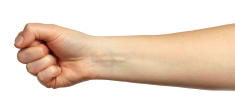
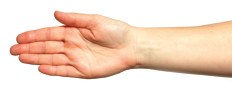
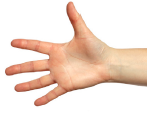
2. Spread and close your fingers and thumb.

3. Touch your thumb pad to the tip of each finger and over to the base of your little finger.


4. Bend and straighten the joint in the middle of your thumb.


5. Bend your wrist backwards and forwards and in a circling motion.
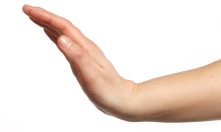

6. Side bend your wrist from left to right.


If any of your wrist movements are stiff and limited, you can use your other hand to help assist the movements.
To prevent elbow and shoulder stiffness you should also regularly bend and straighten your elbows and raise your arms above your head.
Complete all the exercises as directed by your therapist. Always perform the exercises slowly and gently – do not force the movements.
Manage Swelling
By positioning the forearm in elevation across your chest when sitting and sleeping using pillows.
Clinical Therapies Scar Management
As advised by your therapist, once your wound has fully healed you should begin to massage your scar. Using a non-perfumed cream, massage across the scar line in circular movements using deep and firm pressure. This ensures the scar does not stick to the underlying tissues and helps the structures under the skin to move freely.
Activity and Use of your Hand
- Do not remove your splint except to complete the exercises and for hygiene purposes until advised by your therapist.
- Start light daily activities in the splint, progressing to full activities within the splint over the next few weeks. Your therapist will advise you when you can start to remove the splint for activities.
- Return to work between 6 to 12 weeks, depending on work load.
- Return to driving between 6 to 8 weeks.
- Around 8 to 12 weeks you should be able to use your thumb for day to day tasks, although it may ache and be stiff. It may take many more months for you to reach your full potential.
- The recovery period for this surgery is typically around 9 to 12 months and hand function should continue to improve over this time. However, recovery times will vary from person to person.
Contact Us
If you have any problems or concerns, please contact your therapist on:
Doncaster Royal Infirmary – 01302 644207
Bassetlaw Hospital – 01909 572302
Patient Advice & Liaison Service (PALS)
The team are available to help with any concerns, complaints or questions you may have about your experience at the Trust. Their office is in the Main Foyer (Gate 4) of Doncaster Royal Infirmary. Contact can be made either in person between the hours of 9am-3pm, by telephone or email.
Telephone: 01302 642764/642767 or 0800 028 8059
Email: dbth.pals.dbh@nhs.net
Content out of date? Information wrong or not clear enough? Report this page.