
Working within the ‘Born and Bred in Doncaster’ (BaBi-D) research department is Kerry Dooley, Doncaster and Bassetlaw Teaching Hospital’s (DBTH) first ever Research Midwife. She has worked across all areas of the maternity department between the Trust’s Doncaster and Bassetlaw sites in her time at DBTH. The University of York graduate, who is also the Clinical Lead for the study, is passionate about increasing the research portfolio across the Children and Families directorate within the hospitals.

Kerry said: “Ultimately by doing this role I would like to help improve the care women and their families receive locally and nationally through research.”
Kerry‘s first year in post has been very productive, and alongside leading Babi-D, she is supporting other studies, including Giant PANDA, a trial comparing and monitoring hypertension medication in pregnancy, and GBS3, a study exploring Group B strep tests in pregnancy.
Kerry said about these research studies: “It is vital to have speciality nurses and midwives who raise the profile of research and increase research activity and engagement. Evidence shows that hospitals active in clinical research have better patient care outcomes not only for patients involved in trials but also by driving improvement across our services.”
For Kerry, one of the main draws to the role as a Research Midwife was the opportunity to get involved with Babi-D, a public health, birth cohort study. This is one branch of a larger national cohort study co-ordinated by Born in Bradford, an internationally-recognised research programme, that has so far tracked the health and well-being of over 45,000 children and their parents in Bradford.
The BaBi-D programme focuses primarily on the data linkage of routine data between pregnant women and their babies in Doncaster across health, social care and educational organisations. The aim is to enable health researchers to use and analyse this data to better understand the health of our local population with long-term benefits such as improved and tailored health services and a reduction in health inequalities. Kerry said: “We launched BaBi-D in June 2022 and are in the process of rolling the study out across Doncaster and will be offered to all pregnant women attending their booking appointments. The BaBi-D team, including midwives from Doncaster Royal Infirmary and particularly the Community Midwifery Team, have got the study off to a phenomenal start, hitting our first year recruitment target in just five months. Thanks to the fantastic support we have had from the women and families that have consented to the study, we now have over 850 women and babies taking part by agreeing to share their routine data.”

To find out more about this ambitious programme, head over to the BaBi-D webpage.
BaBi-D is part of the BaBi network; a group of local birth cohort studies that work together to link routine data with the aim to improve the health and well-being of
families through research. The BaBi network is part of the Born in Bradford family and is supported by the National Institute for Health Research Yorkshire and Humber ARC (NIHR YHARC). To find out more please visit: www.babinetwork.co.uk
The BaBi network is only possible thanks to the generosity of women and babies who joined the BaBi family and the enthusiasm and dedication of the midwives who invited
them. We are grateful to all the women, babies, health professionals and researchers who make BaBi happen.
Content out of date? Information wrong or not clear enough? Report this page.
A new research study to improve health outcomes for local children and families has just recruited its 500th participant in Doncaster.
Led by Doncaster and Bassetlaw Teaching Hospitals (DBTH), and delivered in partnership between local health organisations, the Born and Bred in Doncaster (BaBi-D) research programme is a birth cohort data collection study. The project links information from both the participant’s patient records and their child’s patient record, to build up a much clearer picture of people’s lives and answer questions that aim to improve healthcare services.
The Research Team at DBTH expected to recruit approximately 10 per cent of the expectant mothers to the study within the first year. This target was set against 2021 birth rate figures and was equivalent to 308 participants. However, the number of participants consenting to take part in the study have exceeded this target, reaching 500 recruits in the first six months of the project.
Prospective participants are asked to join when they see their midwife, who are asked for their consent to become part of the study. If consent is given, health researchers join together lots of data about the participant and their child so that health organisations can look at ways to improve healthcare services through research and planning in the local area and beyond.
Data obtained through the study can help local health organisations explore topics around health inequalities and determine measures to address these areas of concern, such as whether there are relationships between things that happen in pregnancy and children’s future health, if children in some areas are more likely to get asthma than children in other areas, and how our genes affect our health and lives as we grow up.
Speaking about the success of the project, Lois Mellor, Principal Investigator for the BaBi-D study and Director of Midwifery at DBTH, said: “As a partnership approach, the BaBi-D project is fortunate to be facilitated by a diverse range of health and social care professionals, each bringing their expertise to ensure that this project is successful. This is an ambitious and long term project that will capture data from birth through to adulthood, to help inform what health inequalities people in the area have and how we work to reduce these.
“There has been real positivity towards the project from our community and we are proud to see that people appreciate the difference we are trying to make by hosting research programmes such as BaBi-D in the Doncaster area. The success of BaBi-D is only possible thanks to the generosity of women and babies who joined the BaBi family and the enthusiasm and dedication of the midwives who invited them. We are grateful to all the women, babies, health professionals and researchers who make BaBi-D happen.
Sam Debbage, Director of Education and Research at DBTH, said: “We want to ensure this research study reflects the requirements and concerns of the local area. Therefore, we are keen to hear from our community and welcome your thoughts on any research topics you would like the programme to explore. Please do not hesitate to get in touch with the team to give your suggestions.”
Taking part in BaBi-D is voluntary and participants are free to withdraw at any time. This research, like every research project undertaken, is checked to make sure it meets the highest scientific and ethical standards. You can find out more about the study, or provide the team with your research ideas, on the dedicated Born and Bred in Doncaster website: www.dbth.nhs.uk/babi-d

The BaBi-D project is a partnership with health and social care providers and wider partners in the area; Doncaster and Bassetlaw Teaching Hospitals (DBTH), Rotherham Doncaster and South Humber NHS Foundation Trust (RDaSH), Doncaster Council, Primary Care Doncaster, and supported by the research departments at The University of Sheffield and Sheffield Hallam University.
BaBi-D is part of the BaBi network; a group of local birth cohort studies that work together to link routine data with the aim to improve the health and wellbeing of families through research.
The Born and Bred In (BaBi) network is part of the Born in Bradford family and is supported by the National Institute for Health Research Yorkshire and Humber ARC (NIHR YHARC). As of 5 December 2022, the BaBi network has successfully recruited 14,439 participants.
To find out more please visit: https://www.babinetwork.co.uk/babi-sites/babi-bradford
Content out of date? Information wrong or not clear enough? Report this page.
Formally opened in October 2021, the REAcH Hub provides a dedicated area to facilitate research programmes at DBTH, to enable the Trust to deliver more projects and extend its research offer. The hub consists of meeting rooms and training facilities to help in conducting its research projects.
The rooms within the hub have been named after five historic scientists known for their work in furthering research in healthcare.
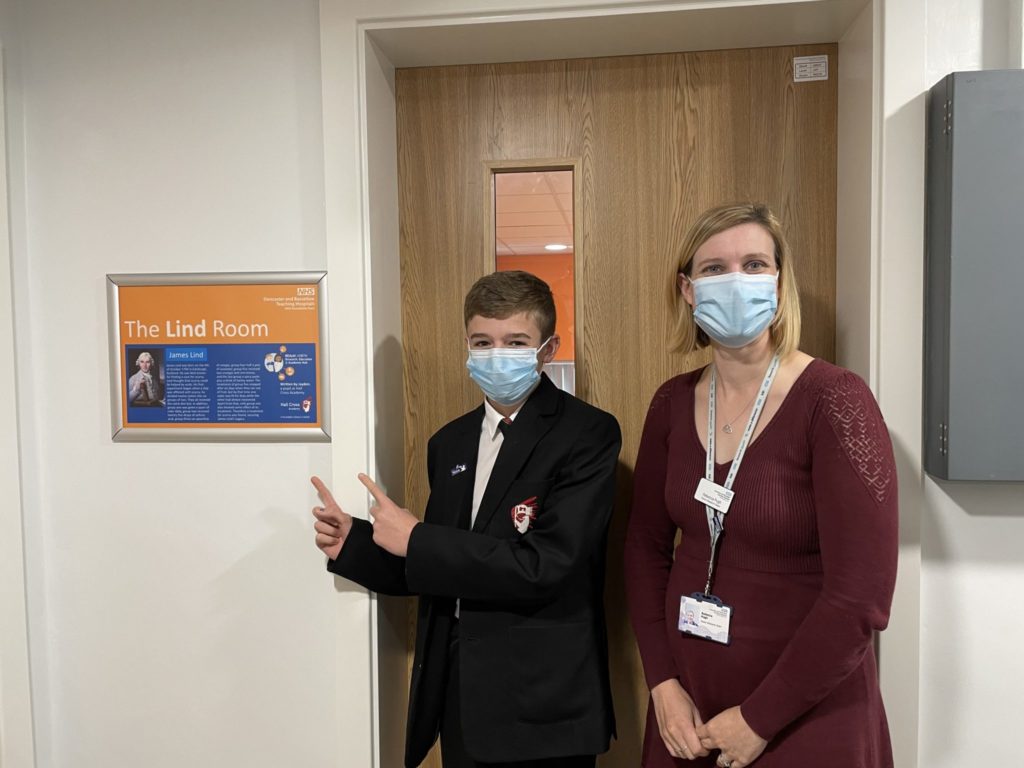
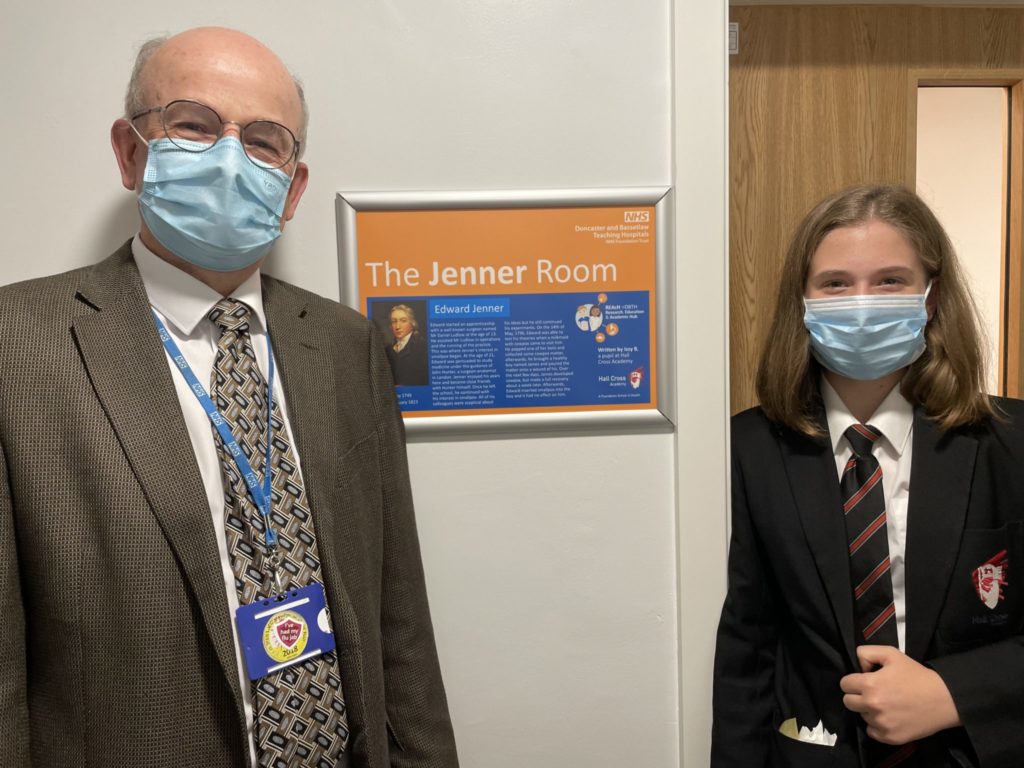
A research project was set by the Education and Research team at DBTH tasked five year eight students from Hall Cross Academy to find out information about the lives of these visionaries and how their work impacted on healthcare through to the present day. Their work appears on the door plaques that mark each of the rooms within the research unit and tells the story of their chosen healthcare scientist.
Whilst the students wrote the narrative for the plaques early this year, the visit has only been practical into the new academic year. However, the students were given the opportunity to come along and see their work first hand, and were given a tour of the facility and a talk by the Professor of Education, Alasdair Strachan.
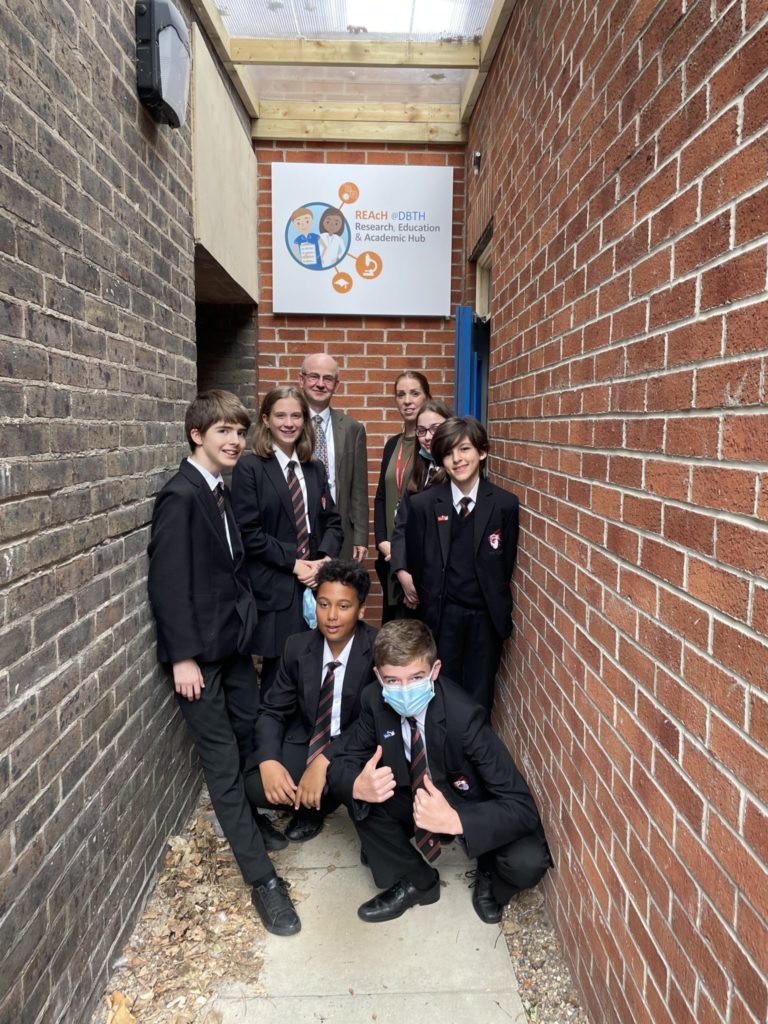
During the talk, Professor Strachan inspired the students to consider a career in research and healthcare. Hall Cross Academy, a Foundation in Health School, have a shared history with DBTH collaborating on many projects, such as the We Care into the Future careers fair, as well as giving volunteer opportunities through their Healthcare Ambassador role, and promoting healthcare as a career choice to its pupils.
Alasdair said: “It has been great to finally allow students from Hall Cross to come along and see our facilities as well as see their wonderful work.
“The research department has been a key part of our strategic plans to move DBTH forward in its research provision. Whilst we have made significant ground in developing and contributing to research, we plan to extend this across the organisation and embed it within every area, so colleagues apply research within their work, whether in engineering, finance or healthcare.
“Our aims are to collaborate with other public organisations, such as Doncaster Council and Rotherham Doncaster and South Humber NHS Foundation Trust (RDaSH), and the University of Sheffield and Sheffield Hallam University to extend our ability to improve outcomes for our populations, one such project being the BaBi-D project, a large cohort of data collected on behalf of babies born within the Doncaster area. Another study is being conducted on an international scale, which seeks to improve breast cancer treatment.”
To find out more about the research the Trust is involved with, please go to: https://www.dbth.nhs.uk/research-and-development/
Images show the students standing next to their plaques. Each plaque displays the name of the room and the student responsible for writing the accompanying information.
Content out of date? Information wrong or not clear enough? Report this page.
The CSPCT is an independent charitable organisation which supports physiotherapy education and research by providing funding for research projects and professional development activities.
Currently novice researchers (predoctoral scheme) and more experienced researchers (postdoctoral scheme) can apply for funding of up to £25,000.
As a panel member, Julie will review research grant applications to assess the importance, quality, and scientific validity of the proposed research, informing decisions on which applications will receive funding, she explained.
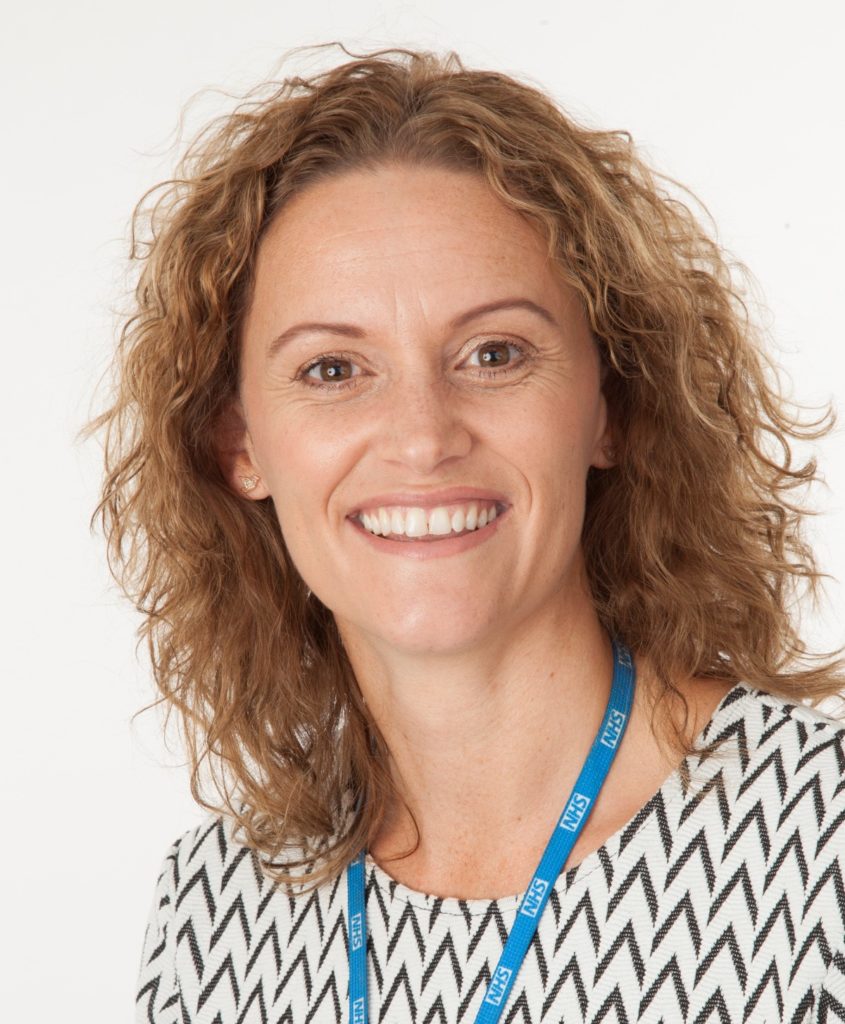
Julie went on: “This role will really help me to understand what a good quality research application looks like in order to support physiotherapy colleagues at DBTH who might be looking to apply for research funding.”
Julie, who is currently on a Clinical Doctoral Research Fellowship funded by the National Institute for Health & Care Research (NIHR), will hold her seat on the panel for two years with the option for a two-year extension at the end of this period.
Initially drawn to the role as a career development opportunity, Julie aspires to contribute to the overall advancement of research in physiotherapy.
She said: “I hope to use my 23 years of clinical experience as a physiotherapist, and my developing research experience, to contribute to driving the direction of high-quality physiotherapy research both for patient benefit and to further the physiotherapy scientific field.”
The CSPCT awards funding biannually to members of the Chartered Society of Physiotherapy.
If you are a member and wish to make an application, visit their website at https://www.csp.org.uk/
Content out of date? Information wrong or not clear enough? Report this page.
The ‘Research Rhino’ mascot made its way throughout the Trust during a weeklong awareness event in May.
When deciding the idea for the mascot, ‘endangerment’ came to mind – something rhinos and research have in common.
Rebecca Pugh, Senior Research Sister at DRI explained: “Rhinos are an endangered species and if not protected will become extinct. This is much the same for research: if it isn’t supported, we will never have any advances in healthcare.”
With a background in care of endangered animals, such as rhinos, John could relate to the efforts of the research team.
John said: “The Trust does so much good work in the community and its awareness week really shows how they are striving to make life better for people”.
“The rhino, and the wonderful, flowered crochet are a fitting symbol for the need to support and protect what is dear to us.”
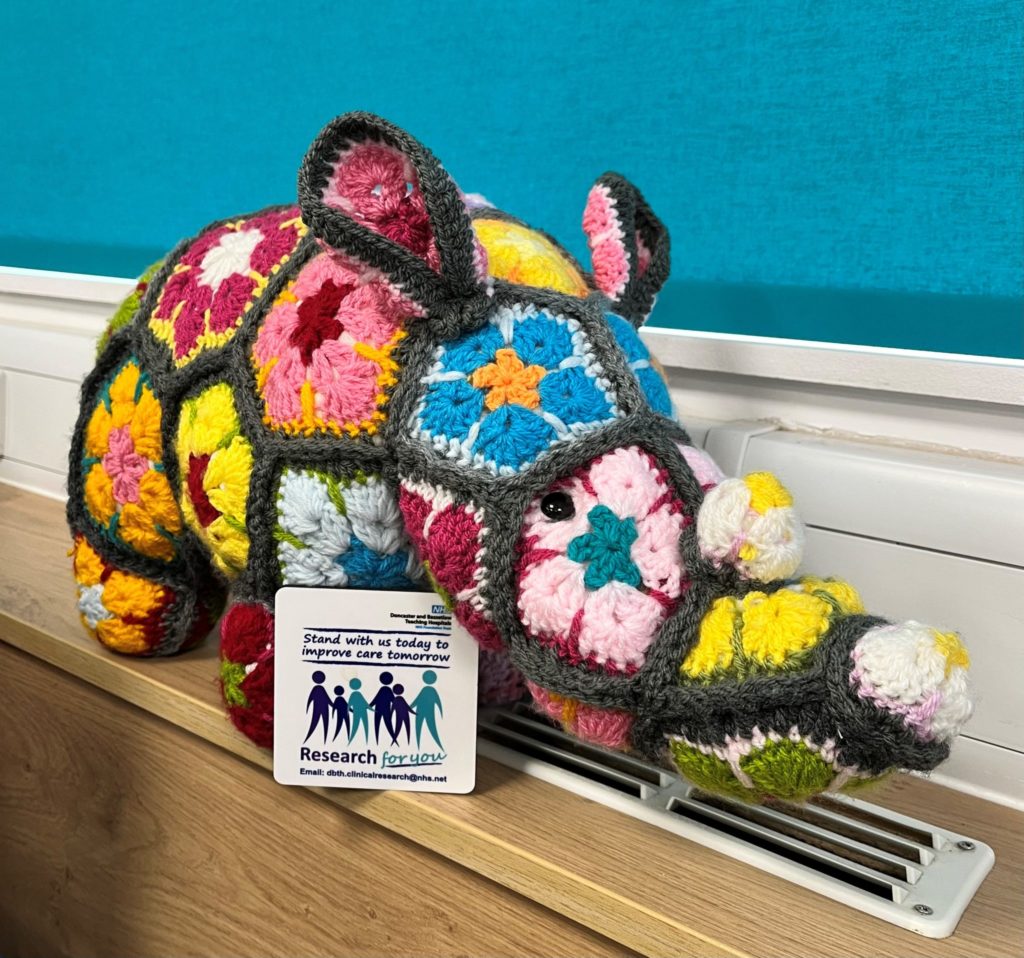
The Research Rhino, made from an African Flower Rhino crochet pattern, was created by Research Sister Angela Waddingham and her daughter-in-law to promote research in health care.
The Yorkshire Wildlife Park has played host to past events for NHS colleagues, displaying its continued support for DBTH.
In September 2021, it held a special NHS thank you event, funded by charitable donations, in which staff were invited to attend the park with family and friends for the day.
Content out of date? Information wrong or not clear enough? Report this page.