
What happened on 6 March 2025 changed his life in a matter of moments.
“It was around 2pm and I was sitting at home eating a late lunch,” David recalls. “I was eating a pear when my wife suddenly told me to spit it out. I didn’t understand what she meant. She told me again because she thought I was going to choke.”
What David did not realise at the time was that he was showing the signs of a stroke. His wife noticed that his left arm had become limp and that one side of his face had started to droop. Recognising the symptoms, she immediately called 999 and contacted their daughters.
Several hours later, David arrived at Doncaster Royal Infirmary, where staff moved quickly to assess him.
David said: “I don’t remember much about those first few hours,” he says. “But I do remember the kindness and professionalism of everyone around me.”
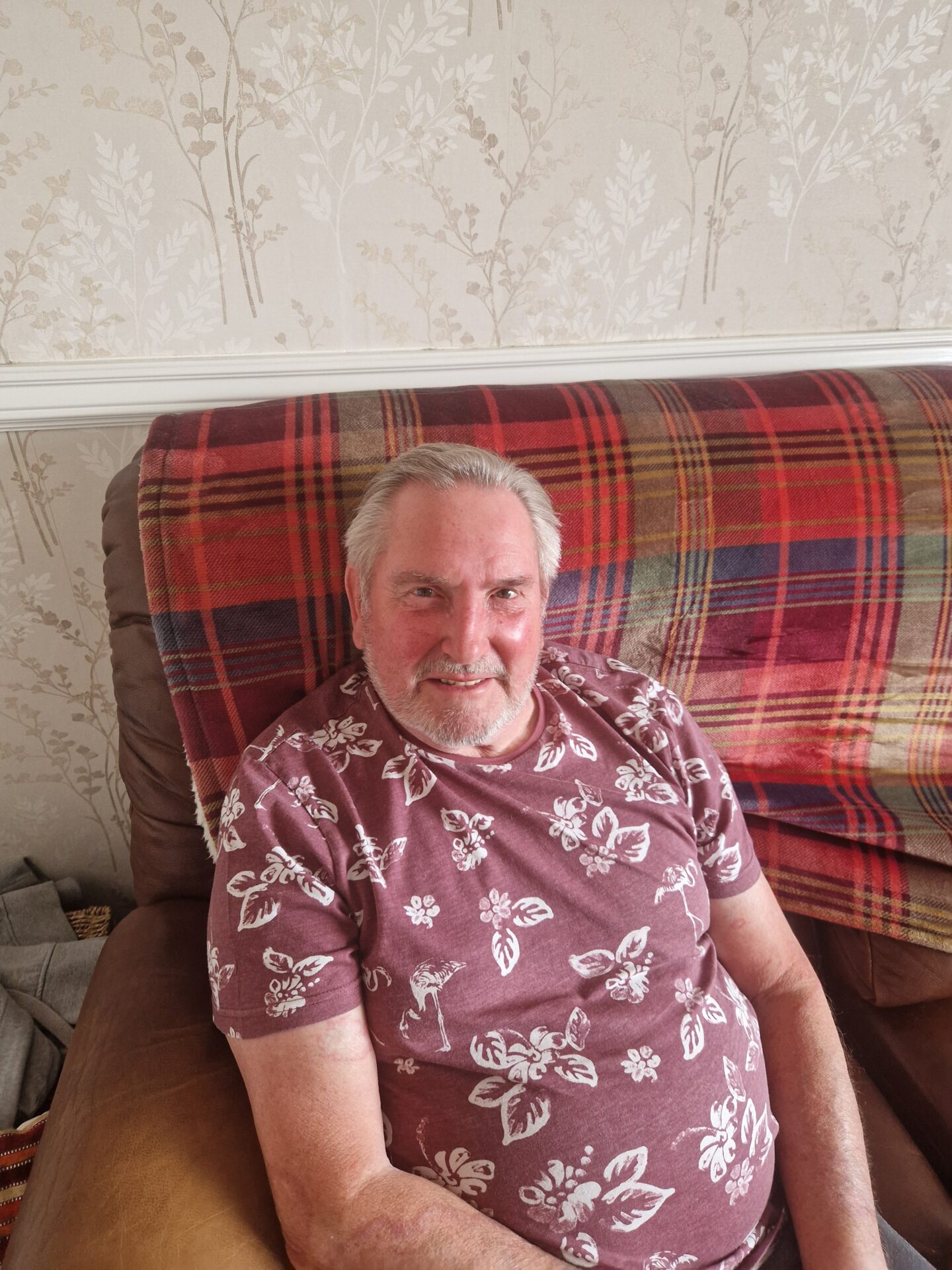
In the Emergency Department, David was met by nurses Claire and Shelley, who arranged an urgent CT scan. The scan revealed a clot on the right side of his brain, confirming he had suffered an acute stroke.
David was transferred to Ward 16, the hospital’s specialist stroke unit, where he was assessed by Dr Khin Nyo. Following evaluation, the decision was made to administer thrombolysis, a clot-busting treatment designed to restore blood flow to the brain and minimise damage caused by stroke.
For many patients, that would have been the end of the immediate emergency. For David, however, another serious complication was about to emerge. Not long after treatment, he began experiencing severe pain in his left leg.
“I thought I had cramp in my calf and foot,” he explains. “The pain was immense. I even tried walking to see if it would ease, but it didn’t.”
Despite pain relief, the symptoms continued to worsen. Concerned by the situation, Dr Nyo requested further investigations and involved the vascular team. An MRI scan revealed a second clot positioned above David’s aortic arch. Further assessment using a portable scanner confirmed that the clot had travelled and become lodged behind his left knee, restricting blood flow to his lower leg.
A decision was made to perform emergency surgery.
Consultant Vascular Surgeon Mr Peter Tan explained the seriousness of the situation.
“Until that moment, I don’t think I’d fully appreciated how serious things were,” David recalls. “Then Mr Tan told me he would do everything possible to save my leg, but he couldn’t guarantee the outcome. He explained there was a possibility amputation might be necessary. Hearing those words was a huge shock.”
In theatre, over the course of four and a half hours, the vascular team carefully located and removed the clot in one piece. Most importantly, David’s leg was saved.
Shortly before midnight, he was transferred to the Intensive Therapy Centre to recover. By the following morning, the results were already remarkable.
The vascular team found that circulation had returned to David’s leg, with normal colour, pulse, temperature and sensation. Assessments by speech and language therapists showed no speech difficulties, while cognitive testing revealed no significant impairment.
“When the physio came to assess me, I told him I wanted to stand up,” David says. “I don’t think they were expecting that.”
With staff supporting him, David stood beside his bed and began marching gently on the spot. His determination quickly became apparent to the multidisciplinary team caring for him.
“My daughter had already warned them that I was stubborn, determined and not very patient,” he laughs.
Over the following days, David continued to exceed expectations. He progressed from short walks around the ward to climbing stairs with the physiotherapy team and successfully completed a range of cognitive assessments and practical tasks designed to assess his readiness for discharge.
“The treatment I received was nothing short of outstanding,” says David. “Nothing was too much trouble. The professionalism, compassion and kindness shown by everyone was incredible.”
Throughout his stay, he was supported by stroke consultants, vascular specialists, nurses, therapists, healthcare assistants and ward staff, many of whom returned to check on his progress even when they were no longer directly caring for him.
After just four days in hospital, David was discharged home. Reflecting on his recovery one year later, he remains deeply grateful for the care he received and aware of how close he came to a very different outcome.
“Emotionally, it took time to understand how serious the situation had been and how lucky I was to survive with so little impairment,” he says.
While he still experiences some aching in his left leg, occasional fatigue and a slight limp, he has returned to living an active and independent life.
“I’ve learned to adapt. My family understand that I don’t have quite the same stamina I once had, but I focus on what I can do rather than what I can’t.”
Today, David continues to spend time at his allotment and enjoys life with his family, grateful for what he describes as “the gift of extra time”.
He also has a message for anyone recovering from a stroke: “If you’re able to, challenge yourself a little every day. Keep your mind active, do some gentle exercise, walk a little further when you can and get out into the fresh air. Above all else, smile. You’re one of the lucky ones. You’re a survivor.”
David is keen to thank every member of staff involved in his care, including Mr Peter Tan, Dr Khin Nyo, Dr Saad Ghaus, Dr Mok, the nursing teams, therapists, physiotherapists and support staff at Doncaster Royal Infirmary.
“There is nothing I can do to repay you for the gift of my extended life,” he says. “I will always be grateful for the care, expertise and compassion shown to me and my family. Thank goodness for the NHS. It gave me a second chance.”