
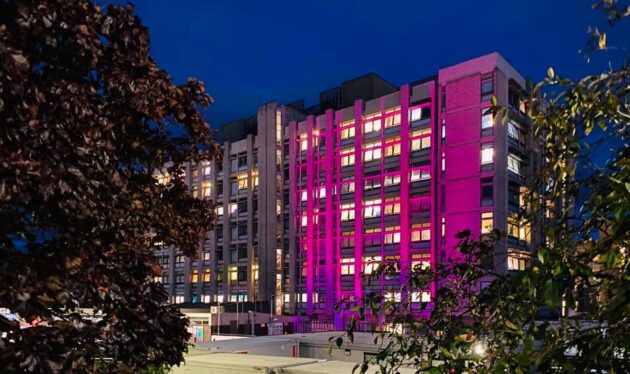
Bassetlaw Hospital and Doncaster Royal Infirmary will be illuminated pink on 22 and 23 September respectively, raising awareness and commemorating the more than 400 people across the UK who died last year while waiting for a transplant.
The week’s activities will also include a memorial service on 23 September, bringing colleagues and families together to remember and celebrate those who donated organs following their death.
Nationally, more than 8,000 people are currently waiting for a transplant, the highest number ever recorded.
Recently published figures from NHS Blood and Transplant show that family consent at the time of death has fallen from 69% in 2020/21 to 57% in 2025/26.
Jane Tute, Specialist Nurse in Organ Donation for NHS Blood and Transplant, said: “It is wonderful to see our hospitals lighting up pink once again for Organ Donation Week. We hope the striking display will catch people’s attention, encourage them to find out more about organ donation and prompt those important conversations with their loved ones.
“Sadly, opportunities to save lives are lost every year, both here in South Yorkshire and North Nottinghamshire and across the country. Families are much more likely to support organ donation when they know their loved one’s wishes, so we’re encouraging everyone to have that discussion and make sure their decision is known.”

Clinicians at DBTH have also come together to form an Organ Donation Awareness Team. Throughout the week, they will visit hospital wards, attend local colleges and take part in the Cusworth Hall parkrun, all to raise awareness of the importance of organ donation.
A single donor has the potential to save up to nine lives, while donated tissue – including skin, bone and heart valves – can improve the quality of life of many more people. Corneal donation can also restore someone’s sight, giving them the opportunity to see the world around them again.
Under the current system, anyone who does not wish to donate their organs must record a decision not to donate on the NHS Organ Donor Register. However, family members will still be involved before organ donation goes ahead, so it is just as important to discuss your decision with your loved ones.
Organ donation is far more likely to proceed when someone has recorded their decision on the NHS Organ Donor Register. In 2025, almost 90% of families supported donation when they knew their loved one had made their wishes clear.
Last year, 769 families did not support organ donation. In 167 cases, families overruled their loved one’s registered or expressed decision to donate. In a further 602 cases, families did not support donation where consent was presumed because their loved one had not recorded a decision.
Together, these cases represented more than 2,000 lost opportunities for transplant.
Almost 29 million people in the UK have already expressed their wish to donate by joining the NHS Organ Donor Register. Despite strong public support, this represents only around 42% of the UK population.
Anthony Clarkson, Director of Organ and Tissue Donation and Transplantation at NHS Blood and Transplant, said: “It’s brilliant to see Doncaster and Bassetlaw Teaching Hospitals showing its support for Organ Donation Week. The modern organ donor card is pink, and it certainly gets conversations going.
“We need people in South Yorkshire and North Nottinghamshire not only to talk to their families about organ donation, but also to register their decision on the NHS Organ Donor Register. This could be the difference between life and death for someone else.”
It takes less than two minutes to confirm your decision. Find out more at www.organdonation.nhs.uk or through the NHS App in England and Wales.
Editor’s Notes: