
Critical appraisal is the systematic evaluation of research or information to judge its quality, validity, relevance, and usefulness before applying it to practice, policy, or decision‑making.
In simple terms, it’s about not taking information at face value, but instead asking: Can I trust this, and is it applicable to my situation?

We offer critical appraisal training which can be tailored for your specific needs. These are normally 2-3 hour group sessions and can be arranged specifically for a department or team. The session will introduce you to principles of critical appraisal and why it is important to evaluate evidence. It covers how to consider the quality, results and local applicability by using a checklist on a relevant example of research.
An e-learning module on Critically Appraising the Evidence Base aims to support NHS colleagues with understanding the different methods and tools to carry out critical appraisal of research, through 8 bite-sized modules.

Critical Appraisal Videos
A series of fairly short (mainly 10-20 minutes long) training videos outlining different types of study design and how to appraise them. Produced by the Cochrane Common Mental Disorders team – part of Cochrane, an international not-for-profit organisation dedicated to making up-to-date, accurate information about the effects of healthcare readily available worldwide.
1. Introduction to Critical Appraisal
2. Systematic reviews and meta analysis
3. Randomised controlled trials
4. Cohort studies
5. Case control studies
6. Cross sectional studies
7. Diagnostic studies
Critical Appraisal with CASP – A series of brief videos produced by the University of Sheffield
Using a CASP checklist to critically appraise a Quantitative study, ScHARR University of Sheffield
Using a CASP checklist to critically appraise a Qualitative study, ScHARR, University of Sheffield
Critical Appraisal Resources
Book collection: here are some examples of what is available, you can find more by searching our library catalogue(YorCat)
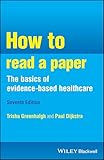
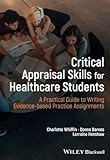
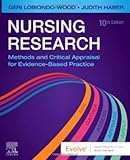
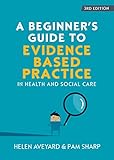
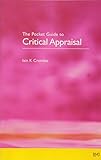

Online Support Materials
CASP – Critical Appraisal Tools and Resources
Centre for Evidence-Based Medicine – EBM tools
How To Read A Paper – collection of BMJ articles by Trisha Greenhalgh
Glossary of Critical Appraisal terms
Want to know your RCT from your Cohort study? Your Meta-analysis from your Blobbogram?
CASP Glossary of Critical Appraisal jargon
Critical Appraisal Checklists
CASP Checklists
The Critical Appraisals Skills Programme (CASP) has 25 years of significant and unrivalled expertise in the delivery of training to healthcare professionals.
These checklists are aimed at practitioners rather than academics, to help appraise published research studies:
Case Control Study
Clinical Prediction Rule
Cohort Study
Diagnostic Study
Economic Evaluation
Qualitative Studies
Randomised Controlled Trials
Systematic Review
Find them on the CASP website
JBI Critical Appraisal Tools
The Joanna Briggs Institute is an international research organisation based in the Faculty of Health and Medical Sciences at the University of Adelaide, South Australia. They cover more study types covered than CASP.
Analytical Cross Sectional Studies
Case Control Studies
Case Reports
Case Series
Cohort Studies
Diagnostic Test Accuracy Studies
Economic Evaluations
Prevalence Studies
Qualitative Research
Quasi-Experimental Studies
Randomized Controlled Trials
Systematic Reviews
Text and Opinion
Find them on the Joanna Briggs Institute website
SIGN checklists
Checklists were subjected to evaluation and adaptation to meet the Scottish Intercollegiate Guidelines Network’s requirements for a balance between methodological rigour and practicality of use. They include more detailed notes on each of the questions asked.
Cohort studies
Case-control studies
Diagnostic studies
Economic studies
Randomised controlled trials
Systematic reviews and meta-analyses
Find them on the SIGN website
Statistics
Statistics Videos
Calculating the risk ratio, odds ratio and risk difference in a randomised controlled trial
Cochrane training
NCCMT: National Collaborating Centre for Methods and Tools – part of the Public Health Agency of Canada
How to calculate Odds ratios
Relative Risk – it’s easy to calculate and interpret
Understanding Absolute and Relative Risk Reduction –
Forest plots and how to interpret them from Steve Bradburn
Mr Nystrom
P values – How peculiar are those results?
Standard Deviations – The average distance from the mean(ish)
Confidence Intervals – What is it? An educated guess
Statistics Book Collection: here are some examples of what is available, you can find more by searching our library catalogue(YorCat)
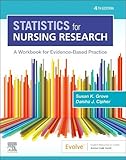
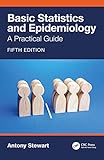
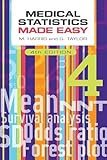
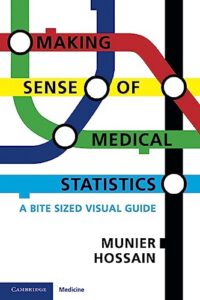
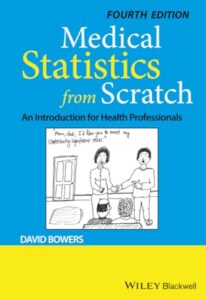


If you’d like more information or to arrange a training session for yourself, your team, or your department – please contact:
Sarah Gardner
Clinical Evidence Specialist
(based at Bassetlaw, but can travel & can use Teams!)
Tel: 01909 572950 or BAS ext.572950
E-mail: sarah.gardner11@nhs.net
Content out of date? Information wrong or not clear enough? Report this page.